What Is Creatine and How Does It Work?
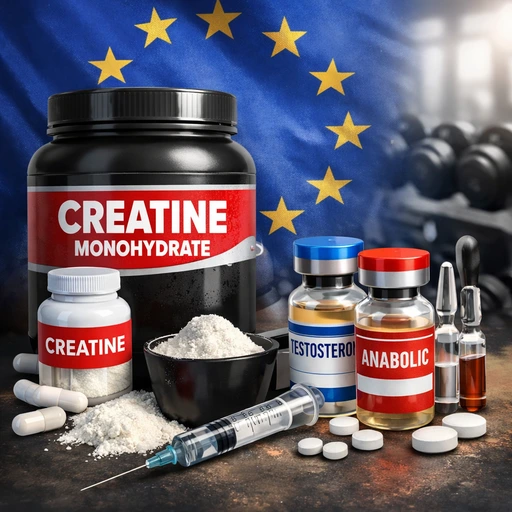
Creatine is a naturally occurring compound stored in muscle tissue and used to regenerate ATP, the primary energy source for short, high-intensity efforts. Supplementing with creatine increases intramuscular phosphocreatine levels, improving strength output, training volume, recovery, and long-term lean muscle gains.
Can Creatine Be Used With Anabolic Steroids?
Yes. Creatine can be safely combined with anabolic steroids and testosterone-based cycles. It does not interfere with hormonal pathways, estrogen conversion, or androgen receptor activity. Instead, creatine complements anabolic compounds by enhancing cellular hydration, strength performance, and training intensity.
Creatine With Testosterone or TRT Protocols
For men on testosterone-only cycles or TRT-style dosing, creatine provides additional strength and performance benefits without increasing systemic risk. It is particularly effective for men over 35–40, supporting muscle preservation, bone density, and workout recovery while remaining non-hormonal.
Water Retention and Kidney Safety Myths
Creatine increases intracellular water within muscle cells, not subcutaneous water retention. In healthy individuals, creatine has not been shown to damage kidney function when used at standard doses. Adequate hydration is recommended, especially during anabolic cycles.
Recommended Creatine Dosage for Bodybuilders
The optimal dose for most users is 3–5 grams of creatine monohydrate daily. Loading phases are optional and not required. Creatine can be taken year-round, including during cycles, PCT, TRT, or natural training phases.
Should Creatine Be Used During PCT?
Yes. Creatine helps preserve training performance and muscle fullness during post-cycle therapy when endogenous testosterone levels are recovering. It does not suppress natural hormone production and supports overall training consistency.
Educational Disclaimer
This content is for educational and informational purposes only and reflects commonly discussed supplementation and harm-reduction practices within the European bodybuilding community. It does not constitute medical advice.